
Too many teens are carrying pain that adults do not always see.
Sometimes trauma looks like anger.
Sometimes it looks like silence.
Sometimes it looks like skipping school, losing focus, shutting down, or pretending everything is fine.
But behind the behavior, there is often a deeper story.
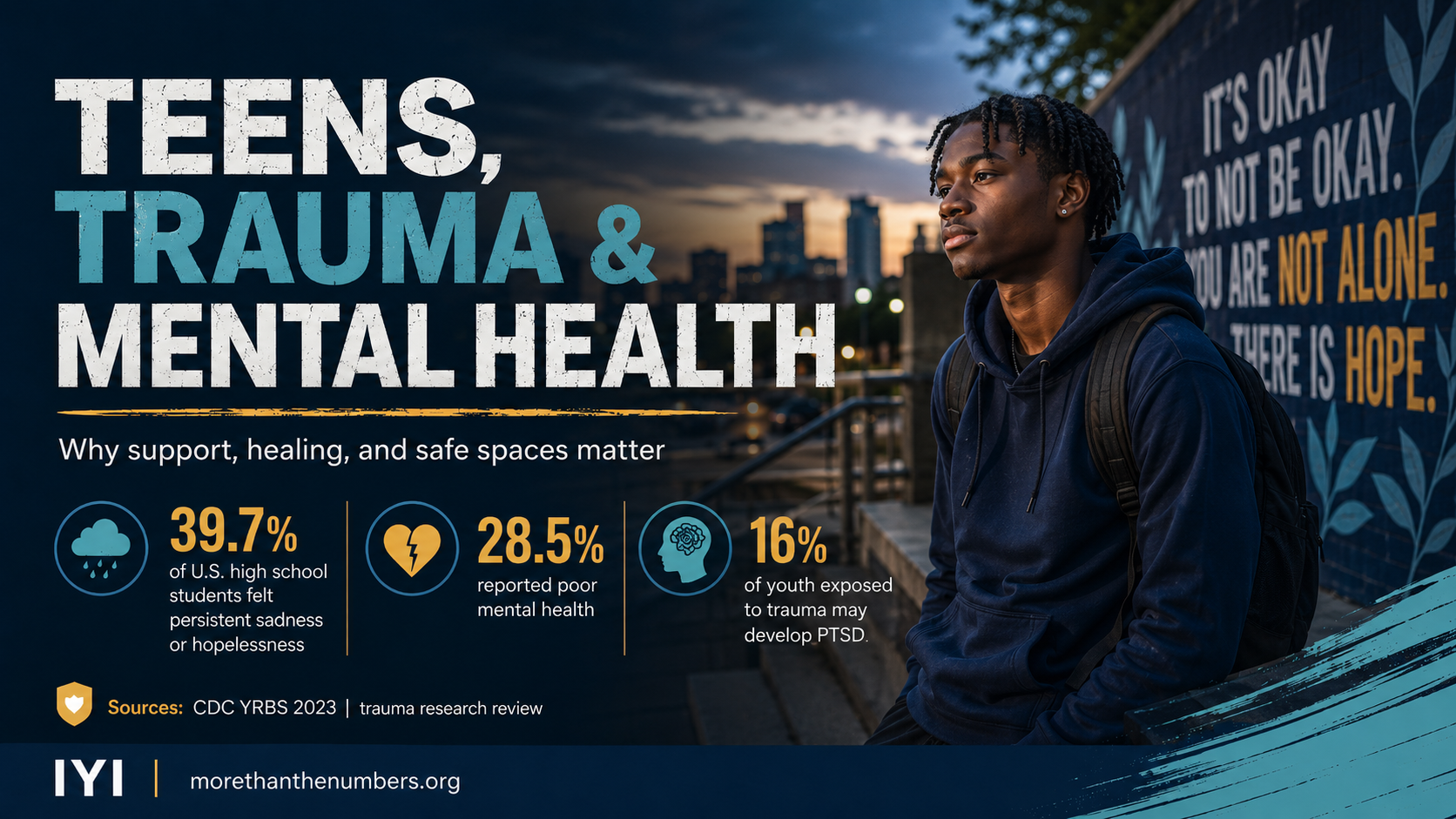
Across the country, youth mental health has become a serious concern. According to the CDC’s 2023 Youth Risk Behavior Survey, 39.7% of U.S. high school students reported persistent feelings of sadness or hopelessness, and 28.5% reported poor mental health. The same report found that 20.4% of students seriously considered attempting suicide and 9.5% attempted suicide during the previous year.
These numbers are not just statistics. They represent young people sitting in classrooms, walking through neighborhoods, scrolling on their phones, and trying to survive pressure that many adults underestimate.
For urban teens, especially Black youth, that pressure can be even heavier.
Many are dealing with community violence, family stress, grief, poverty, bullying, school pressure, racism, unstable environments, and the daily weight of trying to be strong when they are actually hurting. When trauma is repeated or ignored, it can affect how young people think, trust, learn, sleep, and respond to the world around them.
Research shows that trauma can lead to post-traumatic stress disorder in children and adolescents. One review notes that about 16% of children and adolescents exposed to trauma may develop PTSD, although the risk depends on the type, severity, and duration of trauma.
That matters because PTSD is not only something soldiers experience. Teens can experience it too.
A young person who has witnessed violence, lost someone suddenly, been abused, lived in constant fear, or experienced repeated instability may carry that trauma into school, relationships, decision-making, and daily life.
This is why we cannot simply ask, “What is wrong with our youth?”
We have to ask, “What have they been through?”
That question changes the conversation.
It moves us from judgment to understanding.
From punishment to support.
From silence to healing.
The CDC also reports that students with stronger protective factors, such as school connectedness and supportive adults, tend to have lower levels of mental health and suicide risk indicators. That means connection matters. Mentorship matters. Safe spaces matter. Adults who listen matter.
This is where International Youth Initiative believes change can begin.
IYI is focused on creating environments where youth are seen, heard, supported, and exposed to real opportunity. Through mentorship, financial literacy, entrepreneurship, technology, leadership development, and positive community connection, we want to help young people build confidence and direction.
Because mental health is not separate from opportunity.
When a young person has hope, structure, support, and a future to work toward, it can change how they see themselves. It can change how they respond to pain. It can change what they believe is possible.
Our youth do not just need correction.
They need connection.
They need guidance.
They need opportunity.
They need people who care enough to keep showing up.
The pain is real.
But healing is possible.
And if we are serious about building stronger communities, we have to start by protecting the minds, hearts, and futures of our youth.
Learn more at morethanthenumbers.org
International Youth Initiative — helping youth move beyond statistics and into purpose.