In many families and communities, young people do not just learn from what adults say. They learn from what adults model.
They watch how men and women talk to each other.
They watch how conflict is handled.
They watch who gets blamed.
They watch who is heard.
They watch who is dismissed.
Over time, those patterns can become lessons.
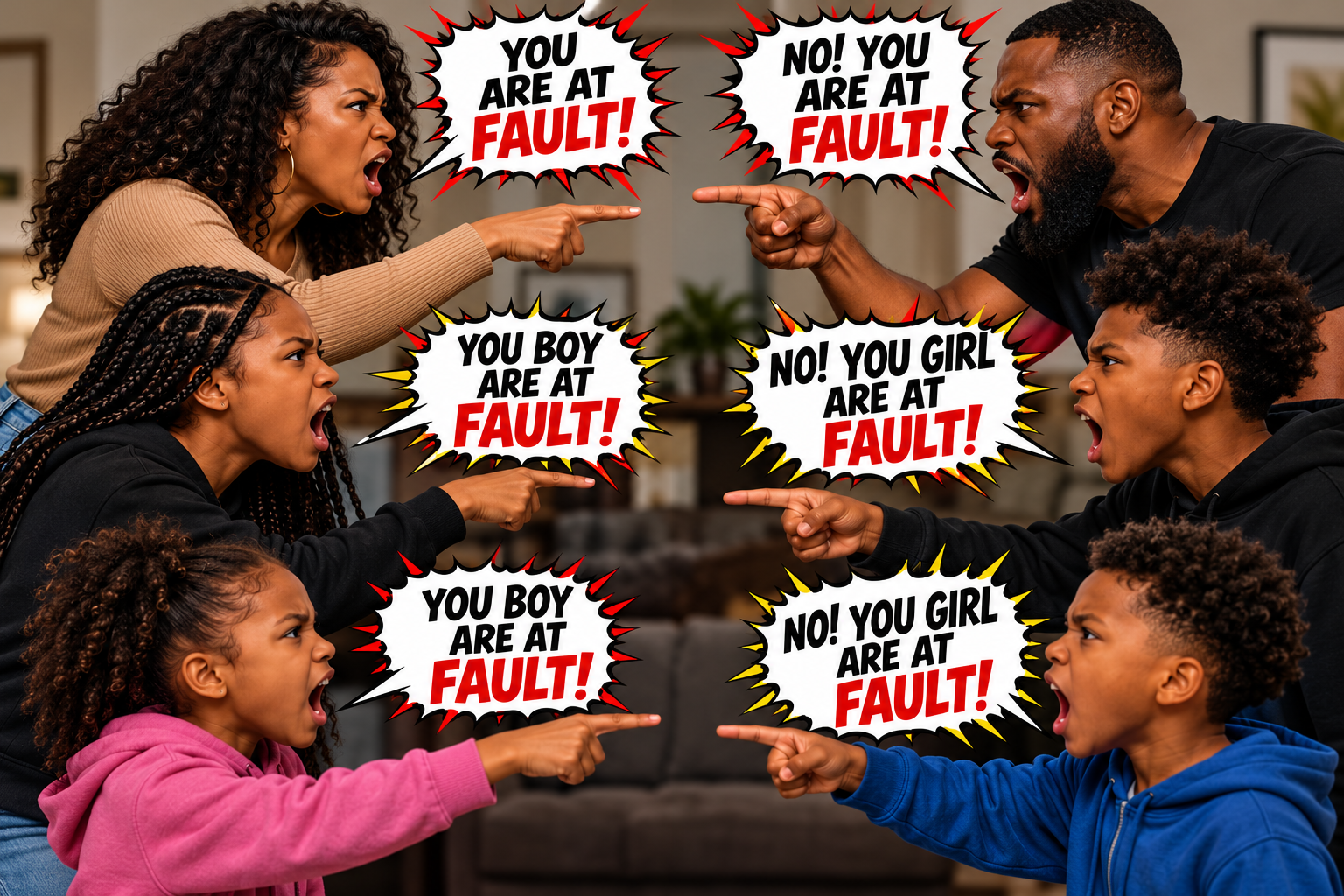
The image shows three generations pointing fingers at each other. The adults blame each other. The teens repeat it. Even the younger children begin to copy the same language, the same anger, and the same division.
That is the real issue.
When blame becomes normal, children can inherit it before they even understand it.
The Pattern Starts Early
Young people often absorb relationship habits from the environments around them. If they constantly hear men blamed for everything, boys may grow up feeling attacked before they are even given a chance to speak. If they constantly hear women blamed for everything, girls may grow up feeling disrespected, defensive, or unprotected.
This can create a cycle where boys and girls begin seeing each other as enemies instead of future partners, friends, parents, leaders, and community builders.
That type of thinking does not stay in childhood.
It can affect how teens communicate, date, trust, lead, resolve conflict, and see themselves.
How It Impacts Black Youth
For Black youth, this matters deeply because they are already facing pressure from many directions — school challenges, violence exposure, social media influence, poverty, trauma, stereotypes, and limited opportunity.
When gender conflict is added on top of that, it can create even more emotional weight.
Instead of learning teamwork, youth may learn suspicion.
Instead of learning accountability, they may learn defensiveness.
Instead of learning healing, they may learn blame.
Instead of learning respect, they may learn division.
This can lead to damaged confidence, unhealthy relationships, poor communication, anger, isolation, and a lack of trust between young Black men and young Black women.
Our youth need better than that.
Blame Does Not Build Community
Blame may feel powerful in the moment, but it rarely creates solutions.
If every conversation becomes “Black men are the problem” or “Black women are the problem,” then our youth are being taught to fight each other instead of understanding each other.
That does not mean we ignore real issues.
There are real wounds in our community. There are real family breakdowns, fatherhood challenges, motherhood pressures, violence, trauma, poverty, and relationship pain. Those issues deserve honest conversation.
But honest conversation is not the same as constant blame.
Healing requires truth, accountability, and responsibility from everyone.
What Our Youth Need to See
Black boys need to see healthy examples of manhood.
Black girls need to see healthy examples of womanhood.
Both need to see adults who can disagree without destroying each other. They need to see men and women communicate with respect. They need to see families, mentors, and community leaders model accountability without hatred.
They need to hear:
“You matter.”
“You are not the enemy.”
“You are responsible for your choices.”
“You can be better than the pain you inherited.”
“You can build healthier relationships than what you have seen.”
That is how cycles begin to change.
The Role of IYI
At International Youth Initiative, we believe youth development is about more than academics or programs. It is also about mindset, identity, emotional discipline, communication, and leadership.
If we want stronger futures for Black youth, we must help them develop stronger ways of thinking.
That means teaching accountability without shame, communication without disrespect, emotional control, conflict resolution, respect between young men and young women, leadership rooted in responsibility, and healing instead of inherited blame.
Our youth do not need to carry every broken pattern from the generations before them.
They can learn something different.
They can learn how to build.
They can learn how to listen.
They can learn how to lead.
They can learn how to love their community without repeating its pain.
Breaking the Cycle
The question is not just, “Who is at fault?”
The better question is:
“What are we passing down?”
If we keep passing down blame, division, and resentment, our youth will inherit those patterns. But if we pass down accountability, healing, respect, and opportunity, they can build something stronger.
The next generation is watching.
What they see from us matters.
Learn more at iyouthi.com